
Cargill’s Presence in the Trump-China Delegation Signals a Potential Shift in Global Agricultural Trade
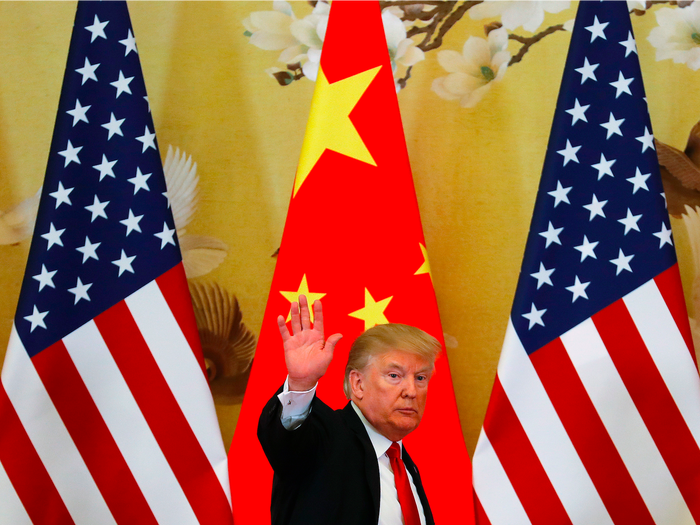
The inclusion of Cargill CEO Brian Sikes in the high-profile U.S. business delegation accompanying President Donald Trump to China has attracted significant attention across global agricultural markets. As Washington and Beijing prepare for another round of strategic negotiations, the presence of one of the world’s largest agricultural commodity traders suggests that food security, grain trade, and agricultural supply chains are once again becoming central pillars of U.S.-China economic diplomacy.
According to international reports, the delegation includes executives from major American corporations such as Apple, Tesla, Boeing, BlackRock, and Cargill. The summit is expected to focus on trade normalization, investment cooperation, agricultural imports, and supply chain stability.

Why Cargill Matters in Global Agriculture
Founded in 1865, Cargill has evolved into one of the world’s largest privately held companies, operating across grain trading, food ingredients, agricultural logistics, and commodity risk management. The company plays a critical role in connecting agricultural producers with global markets, particularly in regions such as North America, South America, and Asia.
China remains one of the most important destinations for global agricultural imports. The country relies heavily on imported soybeans, corn, wheat, and feed ingredients to support its massive food production and livestock sectors. Over the past decade, soybeans became a symbol of both cooperation and tension in U.S.-China trade relations.
During earlier trade disputes between the two countries, China shifted significant portions of its soybean purchases from the United States to Brazil and other South American suppliers. That transition reshaped global trade flows and created volatility across agricultural commodity markets.
Now, with Cargill directly involved in diplomatic discussions, markets are watching closely for signals of renewed agricultural purchasing agreements.
Potential Agricultural Agreements on the Horizon
Reports from international media and agricultural analysts indicate that the Trump-Xi summit could result in new commitments related to U.S. agricultural exports. While analysts believe China may not dramatically increase soybean imports due to existing inventories and Brazilian competition, discussions are reportedly expanding toward other commodities including corn, wheat, sorghum, beef, and poultry products.
- China continues seeking stable food supply chains.
- The United States aims to support domestic farmers and agricultural exports.
- Global food manufacturers need predictable raw material availability.
- Commodity traders require geopolitical stability to optimize logistics and pricing.
For ingredient suppliers and food manufacturers worldwide, any stabilization in agricultural trade between the U.S. and China could influence pricing, availability, and sourcing strategies across multiple sectors.
Implications for Food Manufacturers and Ingredient Markets
The global food industry remains deeply interconnected with agricultural commodity markets. Ingredients such as starches, proteins, vegetable oils, sweeteners, and functional food ingredients all depend on stable agricultural supply chains.
When geopolitical tensions disrupt commodity trade, the consequences can include:
- Price volatility
- Longer procurement timelines
- Supply shortages
- Increased freight and logistics costs
- Reduced predictability for manufacturers
A renewed agricultural understanding between the United States and China could therefore help improve confidence across international supply chains, especially for manufacturers relying on imported raw materials and food ingredients.
This is particularly relevant for companies operating in sectors such as food processing, nutraceuticals, beverages, and dietary supplements, where consistent ingredient quality and reliable sourcing remain critical competitive advantages.
The Strategic Role of Global Supply Chain Partners
In an increasingly uncertain geopolitical environment, manufacturers are prioritizing supply chain resilience more than ever before. Businesses are no longer focused solely on price; they are looking for partners capable of ensuring compliance, maintaining product quality, managing international logistics, and reducing procurement risks.
This is where strategic sourcing and ingredient partners become essential.
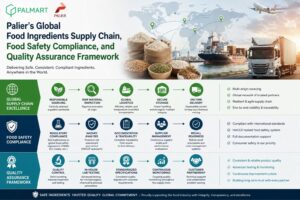
Palmart operates at the intersection of global sourcing, quality assurance, and supply chain reliability. By providing high-quality raw materials and ingredients for the food industry, Palmart supports manufacturers in navigating complex international markets while maintaining operational continuity.
As global agricultural negotiations continue evolving, companies with diversified sourcing networks and strong international partnerships will be better positioned to adapt to changing market dynamics.
Beyond Soybeans: A New Era of Agricultural Diplomacy
Although soybeans remain symbolic in U.S.-China agricultural relations, the broader significance of this summit extends beyond a single commodity. The participation of major agribusiness leaders highlights how food security and agricultural trade are becoming increasingly strategic components of global economic policy.
- Agriculture is now directly linked to geopolitical strategy.
- Commodity markets can shift rapidly due to diplomatic decisions.
- Diversified sourcing and risk management are essential.
- Long-term partnerships matter more than short-term purchasing advantages.
Cargill’s involvement demonstrates that agricultural trade is no longer simply about buying and selling commodities. It is about securing global supply chains, stabilizing food systems, and supporting industrial production across multiple sectors.
Looking Ahead
While the final outcomes of the Trump-Xi summit remain uncertain, the agricultural market is already responding to expectations of renewed cooperation. Commodity traders, manufacturers, and supply chain leaders are closely monitoring whether the discussions will lead to concrete purchasing agreements or broader trade stabilization measures.
Regardless of immediate outcomes, one message is becoming increasingly clear: global agriculture will continue playing a central role in shaping international economic relationships.
For food manufacturers, staying prepared means building partnerships with reliable sourcing specialists who understand both market volatility and operational requirements.
As a trusted global solutions partner, Palmart helps businesses navigate evolving supply chain realities by delivering high-quality ingredients, compliance support, and dependable international sourcing solutions for modern food manufacturing demands.